Exhibition of all nine of Jan van Eyck's known painted portraits, plus his only surviving drawing, at The National Gallery.
Van Eyck: The Portraits opens at The National Gallery on 21 November 2026, and it's a bit of a rarity: all nine of Jan van Eyck's known painted portraits brought together in one place. That's half of his surviving work worldwide, and it's the first and only time they've ever been seen as a group. The exhibition runs through to 11 April 2027 in the Ground Floor Galleries.
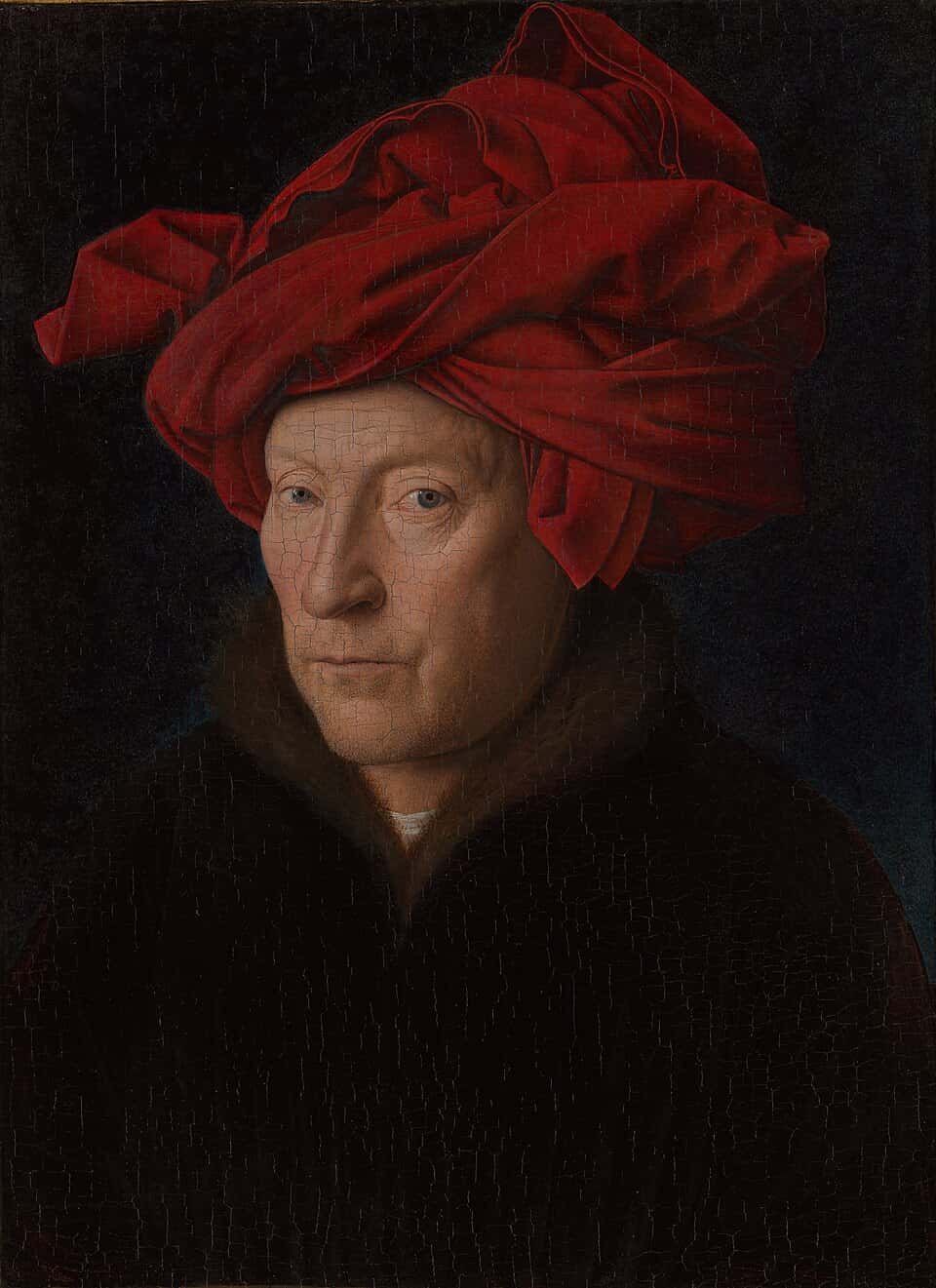
Van Eyck worked as court painter to Philip the Good, Duke of Burgundy, between 1422 and 1441. He's credited with pioneering that minutely realistic style that oil paint made possible, and his sitters weren't kings and queens but successful craftsmen, merchants and relatives. It marks the moment when access to art widened. The show brings together the Arnolfini Portrait (1434) with another panel showing the same sitter, and hangs the portrait of his wife, Margaret (1439) — the first dated, identifiable portrait of a non-aristocratic woman — alongside his own self-portrait.
There's more than just the paintings, too. The exhibition includes van Eyck's only surviving drawing, the Portrait of an Elderly Man (about 1438, silverpoint and goldpoint, from Dresden), which is the only certain preparatory study for a Netherlandish painting of the period and the earliest surviving record of a formal sitting. It's reunited here with the painting it inspired. The Gallery's Portrait of a Man (Self Portrait?) (1433) is also on display, newly conserved. Curator Dr Emma Capron puts it plainly: portraiture burst onto the scene fully formed in the 1430s under van Eyck's brush.
Every week we pick 🏆 the 5 best 🏆 things to do in London and send them to your inbox. Just one weekly email, no spam.
By submitting your email, you accept our Privacy Policy
Standard admission is £18, which includes a complimentary exhibition audio guide; under 18s and members go free. The show runs from 21 November 2026 to 11 April 2027 in the Ground Floor Galleries of The National Gallery.