Exhibition by Torkwase Dyson, with an animation at the Buhl Planetarium and a studio installation of drawings, paintings, objects and video, part of the 59th Carnegie International.
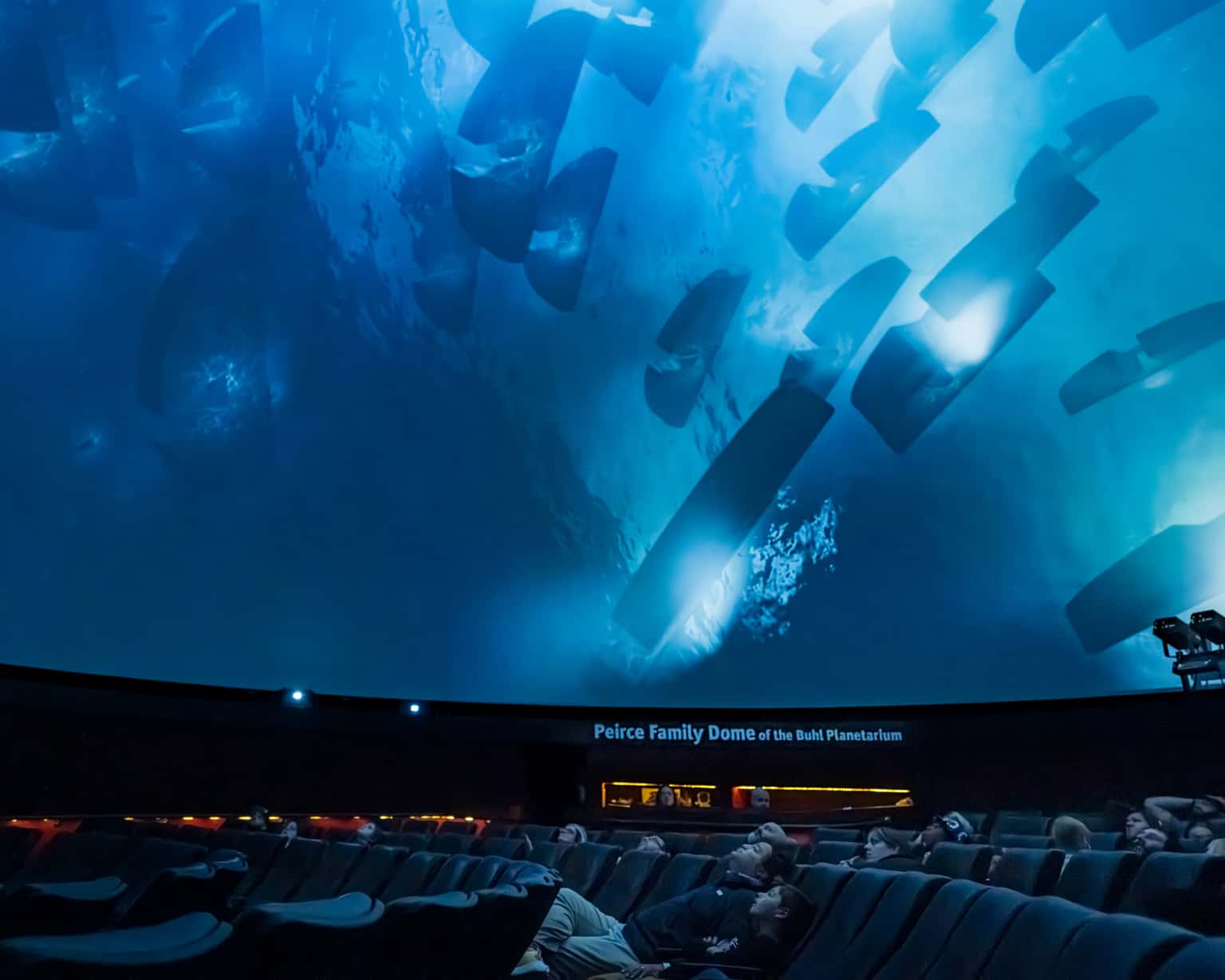
Torkwase Dyson is showing Tomorrow Was Yesterday at the Carnegie Museum of Art, and it's a two-part experience that stretches across the museum and the Kamin Science Center's Buhl Planetarium. The animation screens on Wednesdays and select Sundays at 4 PM, while the rest of the work stays on view from May 2, 2026, through January 3, 2027. It's all free, so you can drop in whenever you're around the museum.
The animation, produced with Hudson Lines, comes out of Dyson's research into oil and gas drilling in the Caribbean seabed, specifically off the coast of Trinidad and Tobago. It puts you underwater in an environment where the machinery of the resource industry has already taken hold. Dyson frames the work around the scale of that extraction infrastructure and the distance between everyday life and the seabed extraction points, treating seabed mining as a transhistorical issue. The animation plays at the Buhl Planetarium, and the second half of the commission is an installation of drawings, paintings, sculptural objects, and a video at the museum, which evokes Dyson's studio as a site of inquiry. You'll want to see both to get the full picture.
Dyson was born in Chicago in 1973 and lives in Beacon, New York, and has shown at the Serpentine Pavilion, the Whitney, MoMA, and the Smithsonian. Tomorrow Was Yesterday is part of the 59th Carnegie International, titled If the word we, curated by Ryan Inouye, Danielle A. Jackson, and Liz Park. The Carnegie International is the longest-running exhibition of international art in North America, and this is one of the commissions it's bringing to Pittsburgh this year.
Every week we pick 🏆 the 5 best 🏆 things to do in Pittsburgh and send them to your inbox. Just one weekly email, no spam.
By submitting your email, you accept our Privacy Policy
Since the animation only screens on Wednesdays and select Sundays at 4 PM, you'll want to check the schedule before you head over to the planetarium. The rest of the installation is on view at the museum through January 3, 2027, and admission is free.