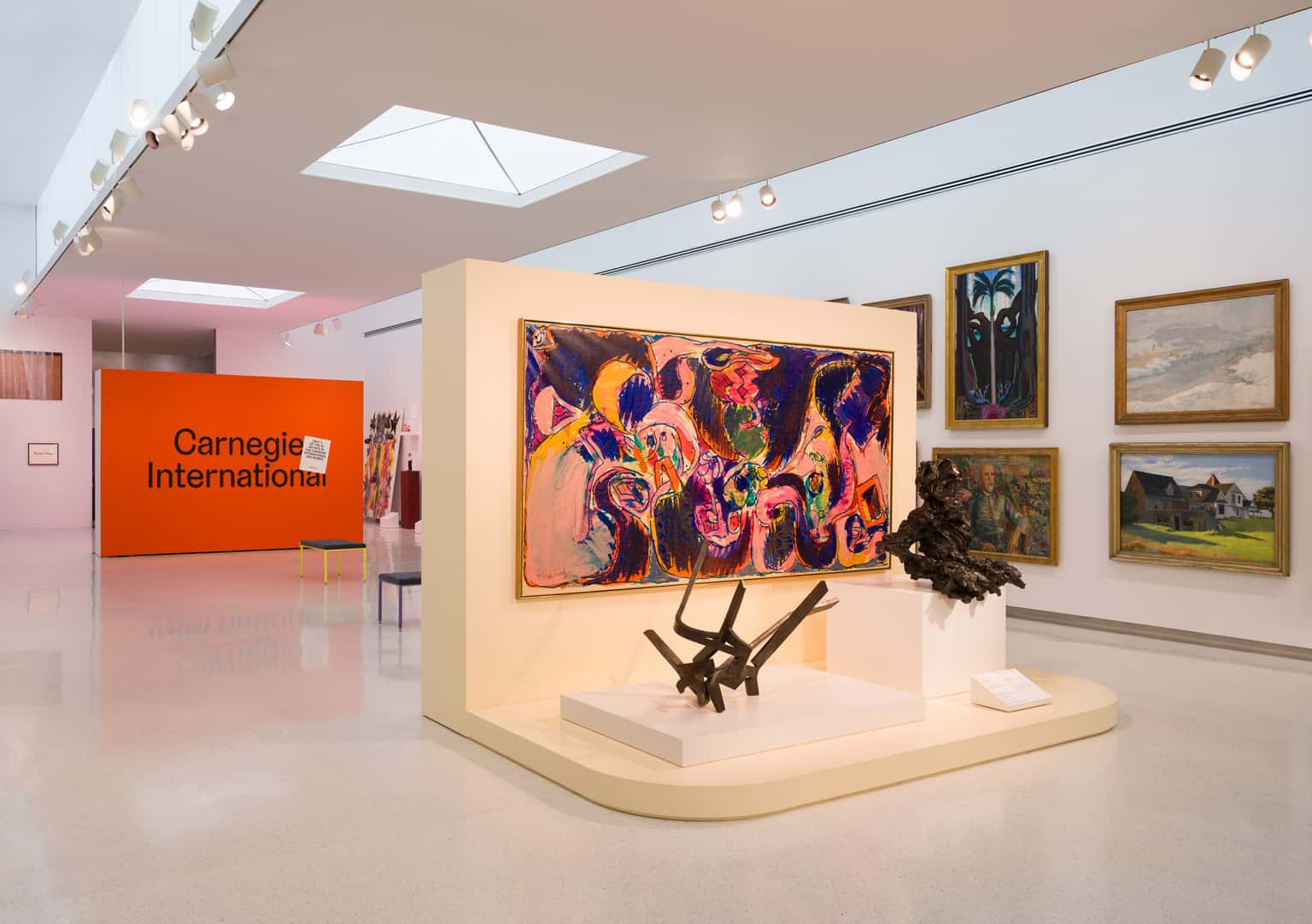
Exhibition of works acquired from the Carnegie International, the museum's signature series of international art shows since 1896.
A History of the Carnegie International is currently on view in Scaife Gallery 4 at the Carnegie Museum of Art in Pittsburgh. It's an ongoing exhibition, so you can drop in whenever you've got a free afternoon.
The show brings together works the museum has acquired from past editions of the Carnegie International, the signature exhibition series that's given the museum its name. To get the scale of it, you have to go back to 1896, when the International was founded. It's the longest-running North American exhibition of international art, staged every three or four years, and over that time it's shown work by nearly 5,000 artists from around 60 countries. The museum has built its collection around the series, and 520 artworks—and counting—have helped shape its identity as an institution that's constantly evolving. This display pulls from that history, showing pieces that came out of the International and ended up in the permanent collection.
The gallery itself is part of the Scaife wing, which is currently the site of the museum's most ambitious multi-year project to date. They're rethinking how the collection is shown and interpreted across 40,000 square feet, a process that involves re-examining more than 100,000 works. So while you're looking at these pieces, you're seeing one part of a much larger overhaul of how the museum handles its holdings.
Every week we pick 🏆 the 5 best 🏆 things to do in Pittsburgh and send them to your inbox. Just one weekly email, no spam.
By submitting your email, you accept our Privacy Policy
While you're in the building, there's another new opening to check out: a gallery dedicated to Charles 'Teenie' Harris (1908-1998), the Pittsburgh-born photojournalist. His archive of nearly 80,000 negatives remains one of the museum's most important resources, and this gallery gives his work its own space. Between the two, you've got a look at the museum's international reach on one hand and its deep local roots on the other.