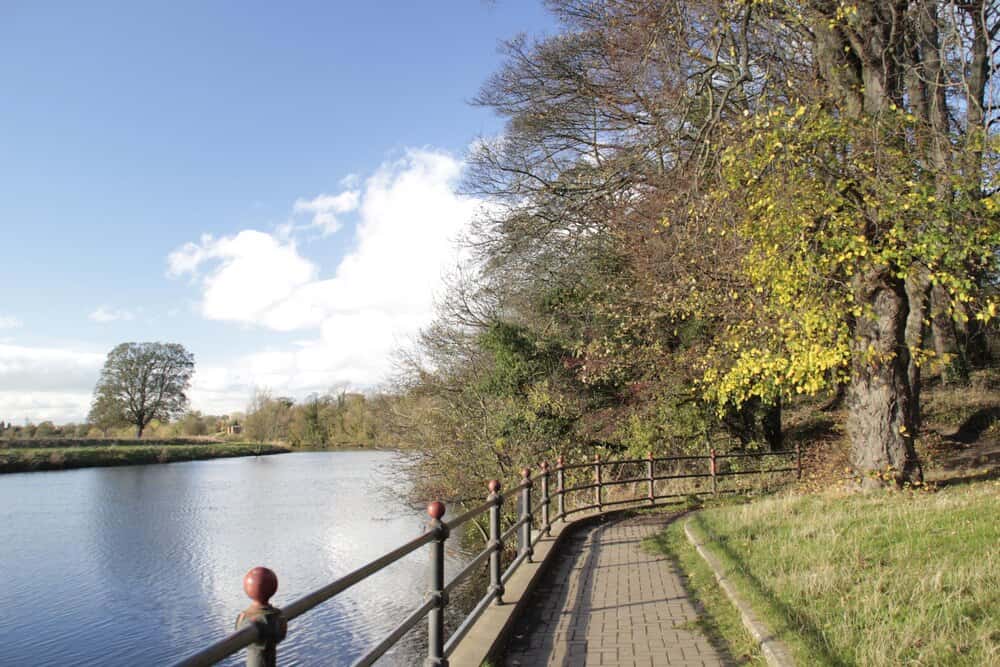
York's River Ouse has always been a working river, but since last summer it has doubled as an open-air gallery. A series of public art installations was permanently put in place along the trail on 10 June 2024, turning a stretch of the riverside into something of an outdoor cultural walk for locals and visitors alike. It is a quiet addition rather than a grand opening, the kind of thing you stumble across while out for a wander rather than a destination in its own right.
Every week we pick 🏆 the 5 best 🏆 things to do in York and send them to your inbox. Just one weekly email, no spam.
By submitting your email, you accept our Privacy Policy
The Ouse itself is a long river for a city walk. It runs just over 60 miles from York and Selby before joining the Trent to form the Humber Estuary, and it is edged in many places by wide water meadows that carry a good deal of wildlife. Upstream of York it changes its name to the River Ure at Ouse Gill Beck, and in the city centre it is met by the River Foss. The river has been used for trade since Roman times, once carrying agricultural produce out and raw materials in; these days most of that commercial traffic has moved to the port of Goole.
If you want to make a proper outing of it, there are a couple of routes that tie in nicely. The Millennium Bridge Circular takes you from the city centre along the tree-lined Georgian avenue of New Walk, with Rowntree Park's woodland walks, ornamental lake and sports facilities along the way. For something longer, the Naburn-York walk is a flat, mostly traffic-free 4.6 miles from Naburn Lock Caravan Park to Skeldergate, with three stiles that you can bypass. It crosses the Ouse over Naburn Bridge, an impressive swing bridge, and winds past Bishopthorpe and the York Bishops Palace before reaching the Millennium Bridge.
Crossing the river is half the charm of the walk, and York is well-endowed with bridges. Ouse Bridge, still within the medieval bar walls, is the oldest crossing here, with records going back to the 9th century; it is Grade II listed, and in 1367 it opened what were likely the first public toilets in Yorkshire, and perhaps in England. Lendal Bridge, from 1863, is a Gothic Revival cast-iron span of 175 feet, and Skeldergate Bridge, built in 1881, was formally made toll-free in 1914. The Millennium Bridge opened in 2001 at a cost of £4.2 million and sits as a key link on Sustrans National Cycle Routes 65 and 66.
Even the smaller bridges have a bit of character. The Naburn Railway Bridge, from 1871, is known as Fisherman Bridge because of a metal sculpture added in 2000, and the Foss bridges tell their own story, from the 1794 Monk Bridge to the 2011 Hungate Bridge. The river Foss was opened as a navigation in the early 19th century and carried newsprint on a large scale right up to 1997.
So, if you are after a low-key way to spend a few hours, the Ouse trail is an easy choice. You can start at the Millennium Bridge and work your way along the water, taking in the art as you go, and then wander back through the city centre. It is a gentle, free way to see a side of York that usually goes unnoticed, and with the installations now a permanent part of the trail, it is there whenever you fancy a walk.
Published Date
23 July 2026