The Orionids are one of the year's best celestial displays, and the 2026 shower is about to hit its stride. It runs from 2 October to 7 November, with the peak falling on the night of Wednesday 21 October, when you can expect roughly 10 to 20 meteors an hour at a dark site, each streaking past at about 66 kilometres a second. They seem to radiate from the constellation Orion, from a point roughly 10 degrees northeast of Betelgeuse.
Every week we pick 🏆 the 5 best 🏆 things to do in Sheffield and send them to your inbox. Just one weekly email, no spam.
By submitting your email, you accept our Privacy Policy
For anyone watching from Sheffield, the timing is the tricky part. On the peak night of the 21st, a waxing gibbous Moon will be roughly half to three-quarters full and will wash out the fainter meteors, only setting at 22:59. The real window opens the following morning: the best viewing time for Sheffield is around 05:30 on Thursday 22 October, when the radiant reaches an altitude of 53 degrees and the Moon, though 82% illuminated, sits below the horizon. That's the moment to catch the fast meteors at their clearest.
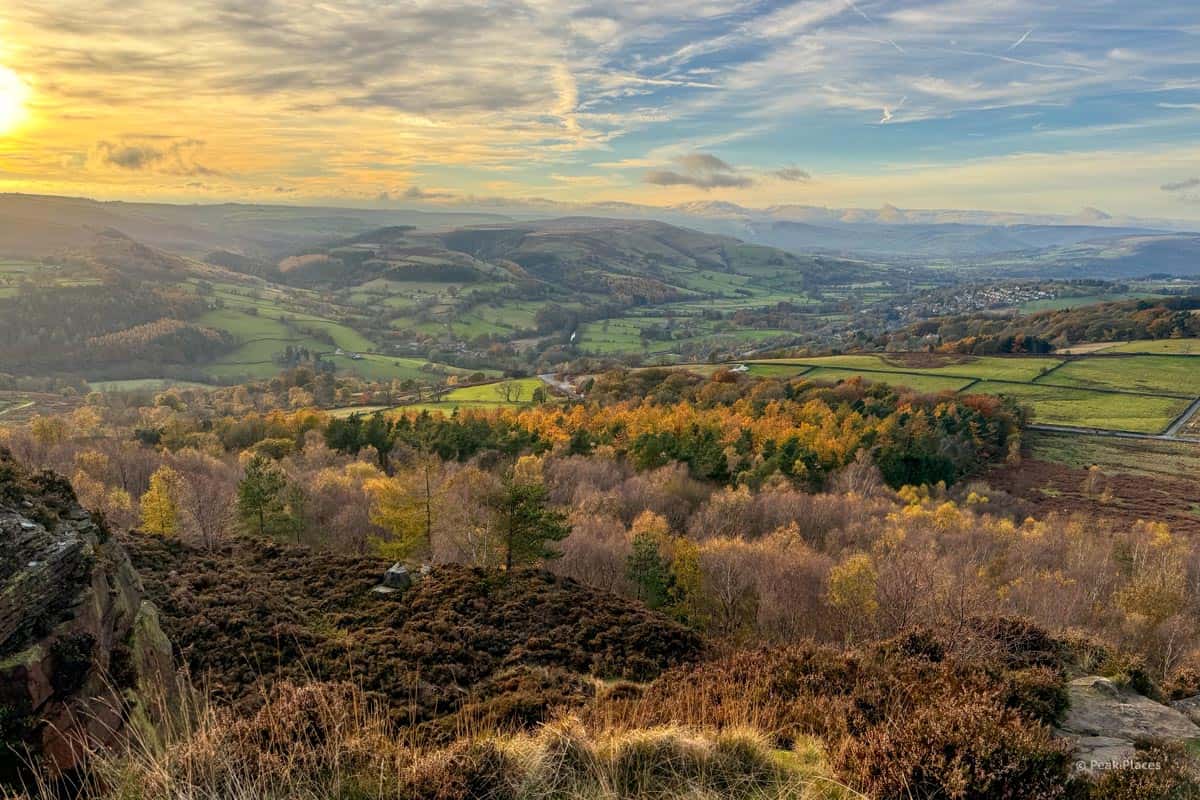
Because central Sheffield is an urban sky, you'll want to head out to the Peak District for a proper look. The National Park has designated Dark Sky Discovery Sites where the skies can be up to 15 times darker than the nearest villages. Surprise View, on the A6187 above Hathersage, gives a wide south view over the Hope Valley and a panoramic night sky towards Chatsworth House. Parsley Hay, off the A515 near Hartington, sits on a high limestone plateau with open horizons and seasonal dark sky interpretation panels. Minninglow, at the High Peak Trail near Pikehall, is very dark to the south and west and, at 370 metres, often reveals the Milky Way. One thing to plan around: car parks at these sites typically close between midnight and 06:00, so your best bet is to time your visit for the early hours rather than a midnight stop.
A few practical tips will make the difference. Give your eyes 20 to 30 minutes to adapt to the dark, steer clear of white screens, and use a red light if you need one. Open moorland drops well below the forecast minimum, so dress warmer than you think you need to. You don't need binoculars or a telescope — the meteors are visible to the naked eye — but apps like Stellarium, SkySafari or SkyView can help you pick out the radiant. If you do bring glass, you might catch Jupiter's moons or the Andromeda Galaxy while you wait.
If you miss the peak, the year isn't done with shooting stars. The Leonids run through November, peaking on the 17th, and the Geminids follow in December, with their peak on the 14th. The Orionids are the next big one on the calendar, so it's worth the early start on the 22nd.
Published Date
18 October 2026
More information