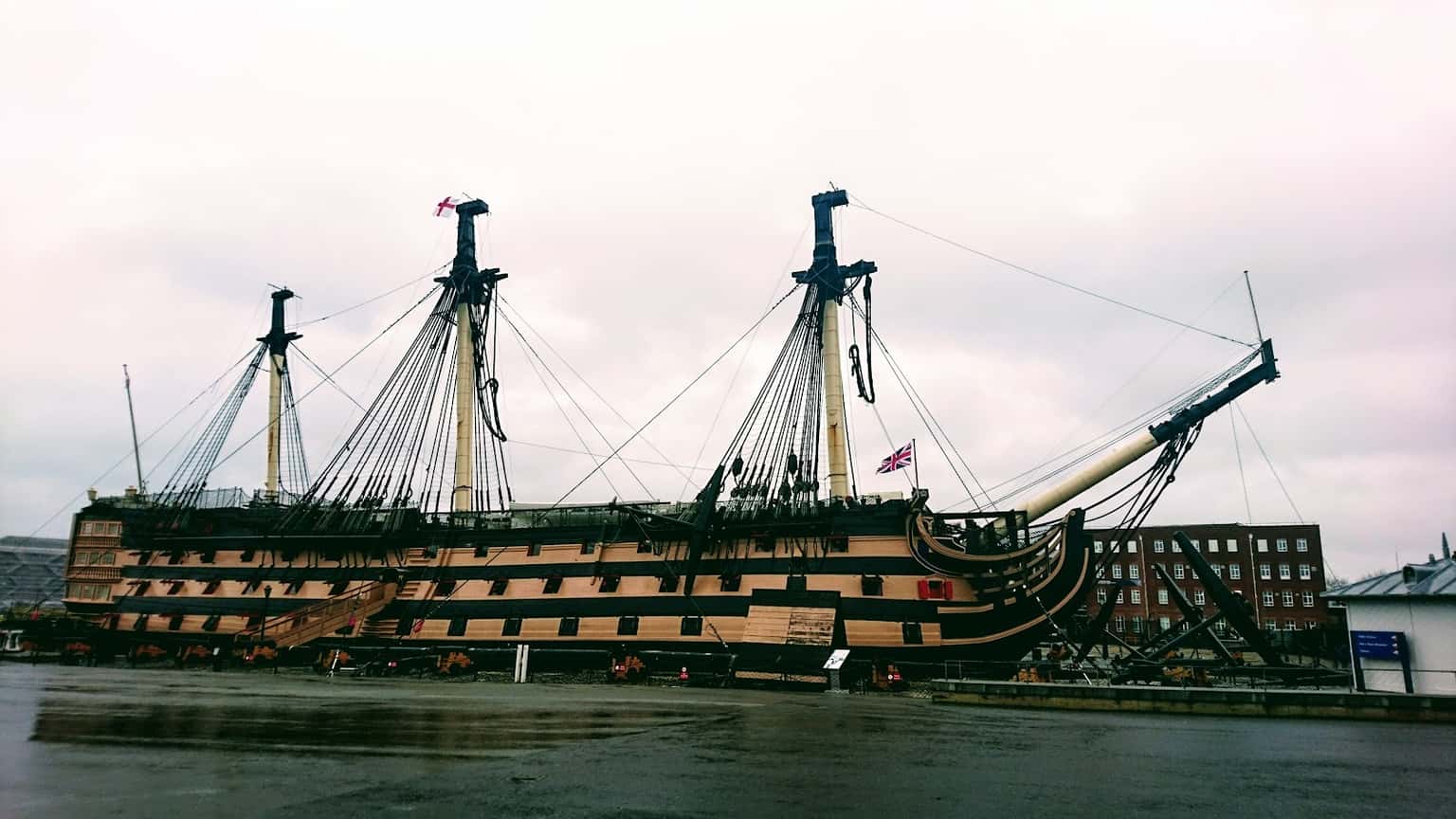
HMS Victory is a historic wooden warship and a 104-gun first-rate ship of the line, best known as Admiral Horatio Nelson’s flagship at the Battle of Trafalgar on 21 October 1805. Built at Chatham Dockyard, she was launched in 1765 and entered service in 1778. Today she remains in service as the world’s oldest commissioned warship, with 248 years of service in 2026. The visit is less about looking at a ship from the outside and more about moving through the working spaces that shaped life on board.
Every week we pick 🏆 the 5 best 🏆 things to do in Portsmouth and send them to your inbox. Just one weekly email, no spam.
By submitting your email, you accept our Privacy Policy
Inside, visitors can walk across the gun decks, see the Great Cabin, where battle plans were prepared, and go down to the Orlop deck, where surgeons treated the wounded. The spot where Nelson was fatally shot is also part of the route. An audioguide is provided at the entrance and is mandatory for the visit. Information about language options is not completely consistent, so visitors who need a Spanish guide should check before travelling. The atmosphere is understandably tight, dark and uneven in places, with low ceilings and narrow passages that give a practical sense of the conditions faced by the crew.
HMS Victory is at Portsmouth Historic Dockyard, Main Road, HM Naval Base, Portsmouth PO1 3LJ, with access also listed at Victory Gate. The dockyard is open throughout the year, although hours change by season. On the information available for 2026, opening is generally around 10:00 to 16:45, extending to about 17:30 in summer; last entry can be earlier, so checking the official website before setting out is sensible. The site closes on Christmas Eve, Christmas Day and Boxing Day. A ticket for the dockyard can also cover its wider attractions for a full year, but HMS Victory itself is the main focus here.
The ship is currently undergoing Victory Live: The Big Repair, a £42 million conservation project intended to protect it for the next 50 years. Work is expected to continue until around 2032, with some sources giving 2033. Recent stages have included repairs to the keel and frames, temporary removal of the mizzen mast, foremast and bowsprit, and the installation of new viewing platforms at the stern. That means parts of the ship or visitor route may change during the project, but it also makes the visit a chance to see an active conservation effort rather than a finished display.
Published Date
5 October 2026