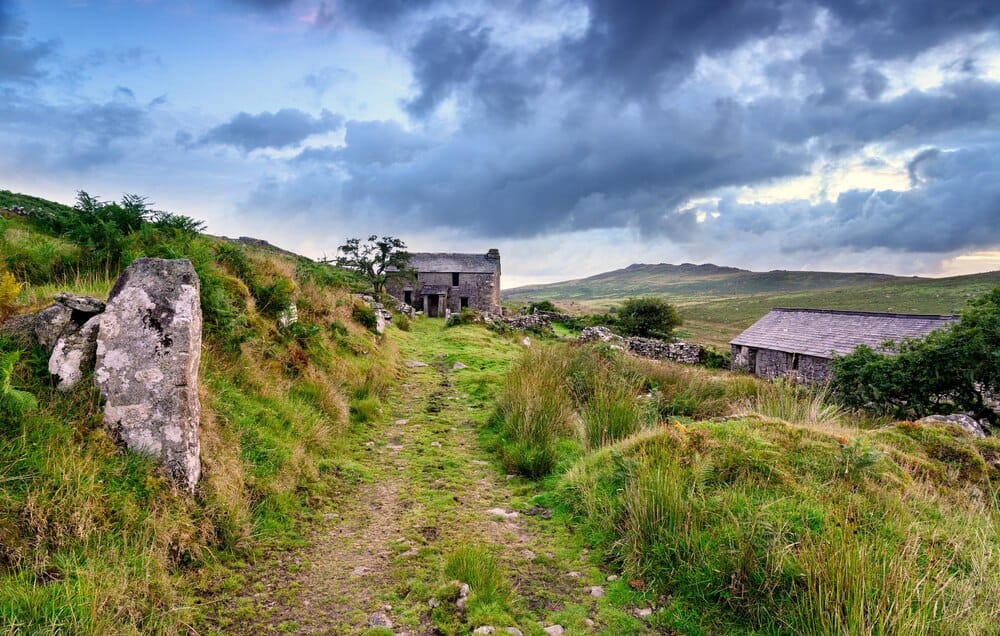
There is a particular kind of quiet you only find on Dartmoor, and at Hound Tor, it comes with a story. Up on the moor, not far from the rocky outcrop that gives the place its name, the stone footings of a deserted medieval village are still visible, and they make for an easy day out from Plymouth if you fancy a bit of history with your walk. It is not a site you will find on most tourist maps, which is part of the appeal: you can wander among the ruins of a community that vanished centuries ago without fighting any crowds.
Every week we pick 🏆 the 5 best 🏆 things to do in Plymouth and send them to your inbox. Just one weekly email, no spam.
By submitting your email, you accept our Privacy Policy
The village was occupied during the thirteenth and fourteenth centuries, and it was not abandoned overnight. The layout is still readable, with the remains of several longhouses and other structures arranged in a rough line across the moor. These longhouses were the heart of the place, built to shelter both the family and their livestock under one roof, and you can still pick out the stone walls and the outlines of the rooms they once held. It gives you a real sense of how people lived and worked out here, far from any town.
Life was hard on Dartmoor, and the archaeology tells that story plainly. The people who lived here scratched a living from the land, farming what they could and keeping livestock on the poor soil, all while dealing with the high rainfall and cold temperatures that come with the moor. It was a precarious existence, and a combination of economic pressure and the devastating impact of the Black Death likely pushed the village over the edge, leading to its abandonment in the early fifteenth century. The site was only rediscovered and excavated in the twentieth century, so for a long time, this whole chapter of the moor lay hidden.
Today it is protected as a Scheduled Ancient Monument and looked after by the Dartmoor National Park Authority, which means it is kept as it is rather than being turned into a visitor attraction. There are no tickets, no gift shop and no guided tours, which is exactly why it works as a family day out: you just turn up and explore at your own pace. It is a good spot for anyone who likes a bit of archaeology without the ropes and the signage, and it is a gentle introduction to the subject for children who might find a museum a bit dry.
A few practical things are worth knowing before you set off. The site is open all year round, so it is as much a winter walk as a summer one, and dogs are welcome as long as they stay on a lead. The car park sits about half a kilometre from the monument, so there is a short walk across the moor to reach the ruins, which is part of the charm rather than a chore. If you have any questions before you go, the Dartmoor National Park Authority can be reached on 01626 832093. It is a simple, free day out that rewards a bit of curiosity, and it is hard to beat for a quiet afternoon on the moor.
Published Date
23 August 2026