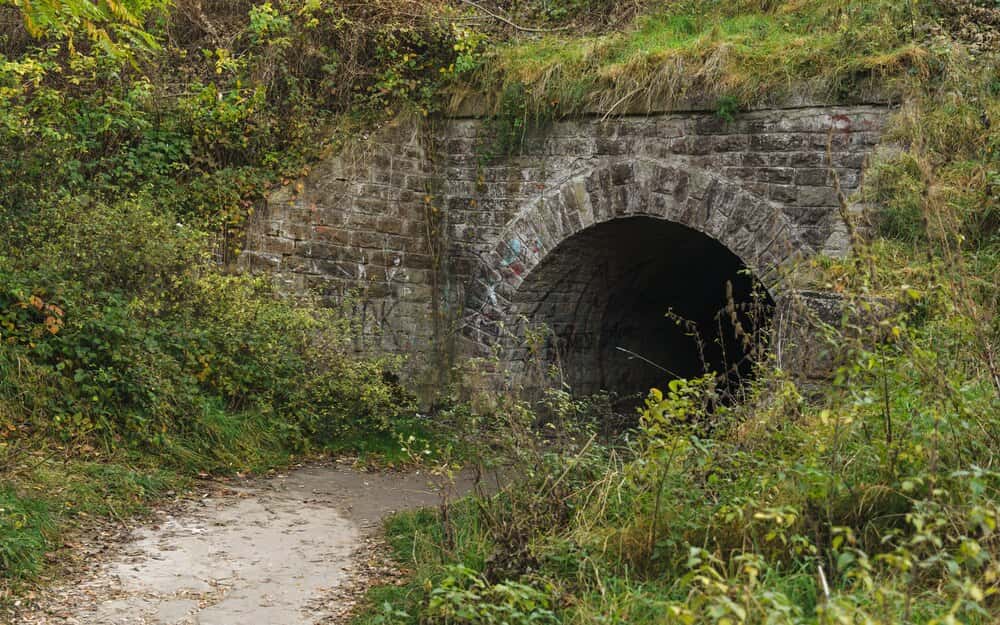
Plymouth is a city built on top of itself, and some of its most interesting history is the kind you can't see from the pavement. The most complete example sits at Mount Wise in Devonport, south of the dockyard that dates back to the 1690s: the Mount Wise Maritime HQ, a two-storey, nine-sided nuclear bunker built into a dry moat. It was proposed in 1937 as a protected Combined Command HQ, with work starting in 1939 on a facility designed to withstand a direct 500lb bomb impact. By early 1941 it was finished and serving as the protected centre for the Commander-in-Chief Plymouth and the Fortress Defence HQ.
Every week we pick 🏆 the 5 best 🏆 things to do in Plymouth and send them to your inbox. Just one weekly email, no spam.
By submitting your email, you accept our Privacy Policy
The bunker was only the start. In 1942, with D-Day on the horizon, the 695th Artisan Works and several tunnelling and pioneer companies dug a network of tunnels about 60 feet below the lawn of Admiralty House. Drilling began on 15 December 1942, paused in March 1943 because of technical issues and subsidence, and only finished in the spring of 1944. Known as the Plymouth Underground Extension, or PUE, these tunnels linked radio, telephone, telegraph and voice terminals to Army Command, US Army and Navy headquarters, the RAF, and government communications centres as far away as Bletchley Park. The main entrance was at the south-west corner of Hamoaze House, and today only two of the three adits are still accessible, one of them an emergency exit in Blagdon's Boat Yard that carries an inscription to the tunnelling and pioneer companies.
Inside, the MHQ was a working command centre: a joint operations room, a radio room, the 'South West Switch' switching room, a UPS room with lead-acid batteries, BT and GPO switching rooms, air conditioning rooms, a kitchen and diesel generators. The PUE kept its 1940s diesel tanks, generators, switching rooms and a patching board. It stayed in MOD service 24 hours a day until 2004, when it was decommissioned and handed to Defence Estates. In the meantime, it had been upgraded several times, with explosion protection added to the entrances and ventilators in 1955, a computer system replacing old maps and plans in 1985, and a major 1990s refit that installed two Rolls-Royce V12 diesel generators alongside new ventilation, air conditioning and filtration.
Above ground, the site has changed just as much. Admiralty House is a Grade II listed building in Plymouth limestone, designed by James Wyatt and built between 1789 and 1793, and it has worn many hats: first Government House for the military Governor of Plymouth, then the home of the General Officer Commanding Western District, and from 1934 the residence of the naval Commander-in-Chief. Winston Churchill visited the house and its combined headquarters in 1941. After the war, the headquarters took on a NATO role covering the Eastern Atlantic, and the house remained the home of the Flag Officer, Plymouth until that post was disbanded in 1996. The whole Mount Wise estate was sold in 2006 for £5.5 million and turned into a residential area, with the bunker itself converted into a 50,000 square foot data storage centre.
For a different kind of underground history, Devonport Park holds its own secrets. While building a new adventure playground in February 2009, workers accidentally unearthed one of five known WWII air-raid shelters near Fore Street, split into public and naval sections. Inside were corn beef tins, buttons, a child's ring, a Zippo lighter, 1940s graffiti and a set of 'City of Plymouth Public Shelter Rules'. Hundreds of these shelters were built across the city, but few remain, and none are open to the public. A second shelter in the park is still buried, waiting to be found.
Published Date
13 October 2026