If you think you know Plymouth's landscape inside out, it is worth taking a closer look at the architectural and artistic details that often blend into the background of our daily commutes. Beyond the familiar sights, the city's built environment holds quiet stories of survival, reinvention, and creative detail. From the dramatic post-war reconstruction to the subtle integration of historic structures into modern spaces, Plymouth's streets function as an open-air gallery for anyone who knows where to look.
Every week we pick 🏆 the 5 best 🏆 things to do in Plymouth and send them to your inbox. Just one weekly email, no spam.
By submitting your email, you accept our Privacy Policy
A prime example of this architectural evolution is The Box on North Hill. While many of us visit for the major exhibitions, the building itself is a masterclass in blending different eras. The core of the complex is the Edwardian Baroque structure built between 1907 and 1910 by Thornely and Rooke. Today, it seamlessly incorporates the former Central Library and the restored St Luke's Church, which dates back to 1828. If you look closely at St Luke's, you can spot the outdoor pulpit added to the wall over Tavistock Place in 1913. Inside, the east window features a contemporary installation by artist Leonor Antunes, made of 24 pieces of coloured fused glass that interact beautifully with the natural light. The dramatic "archive in the sky" extension, a massive cantilever structure clad in thousands of multi-finish panels, shows how bold modern design can coexist with Edwardian stone.
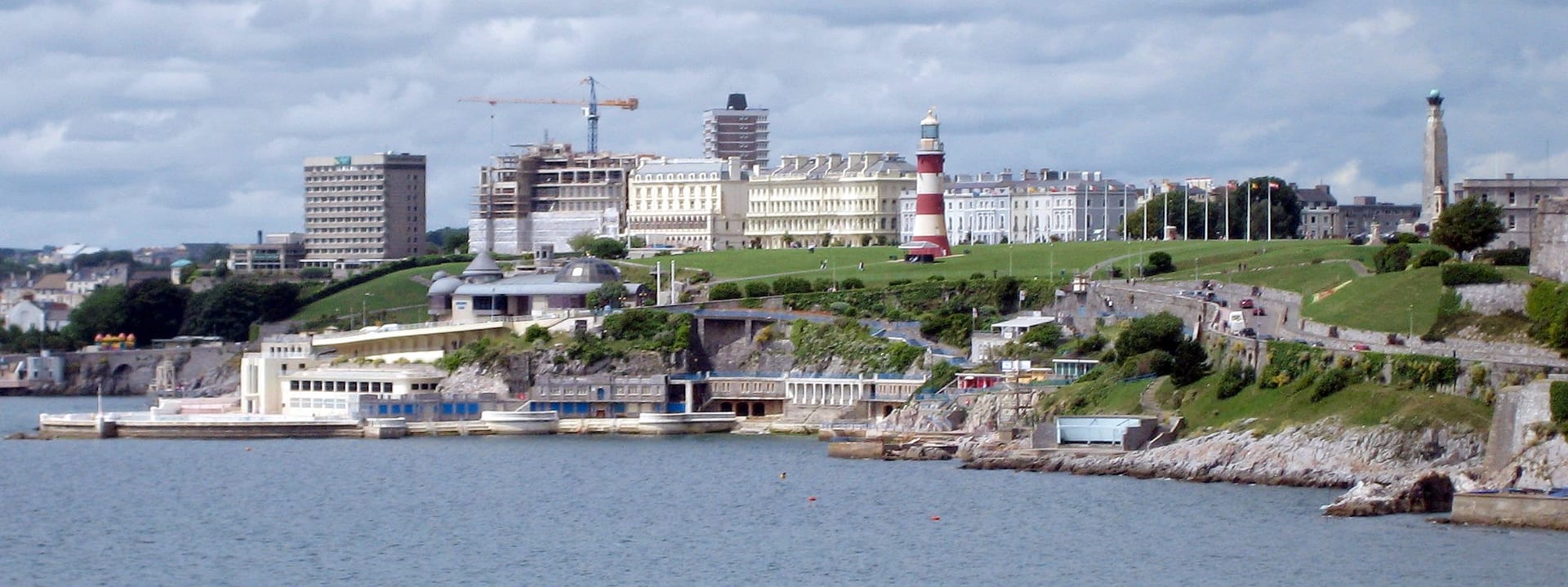
Further down towards the waterfront, Plymouth Hoe offers more than just a grassy spot for a sunny afternoon. The area is a physical timeline of the city's defensive and social history. While Smeaton's Tower and the Art Deco curves of the 1930s Tinside Lido are hard to miss, other details require a bit more attention. The Royal Citadel, a 17th-century star-shaped fortress at the eastern end, remains a striking example of military architecture that has been in continuous use since its construction. Nearby, the memorials scattered across the grass tell their own design stories, from the central obelisk of the Royal Naval war memorial designed by Robert Lorimer in 1924, to the sunken garden added by Edward Maufe in 1954. Even the three-level belvedere from 1891 offers a quiet nod to Victorian seaside planning, reminding us how generations of locals have paused to take in the very same view.
Published Date
14 July 2026