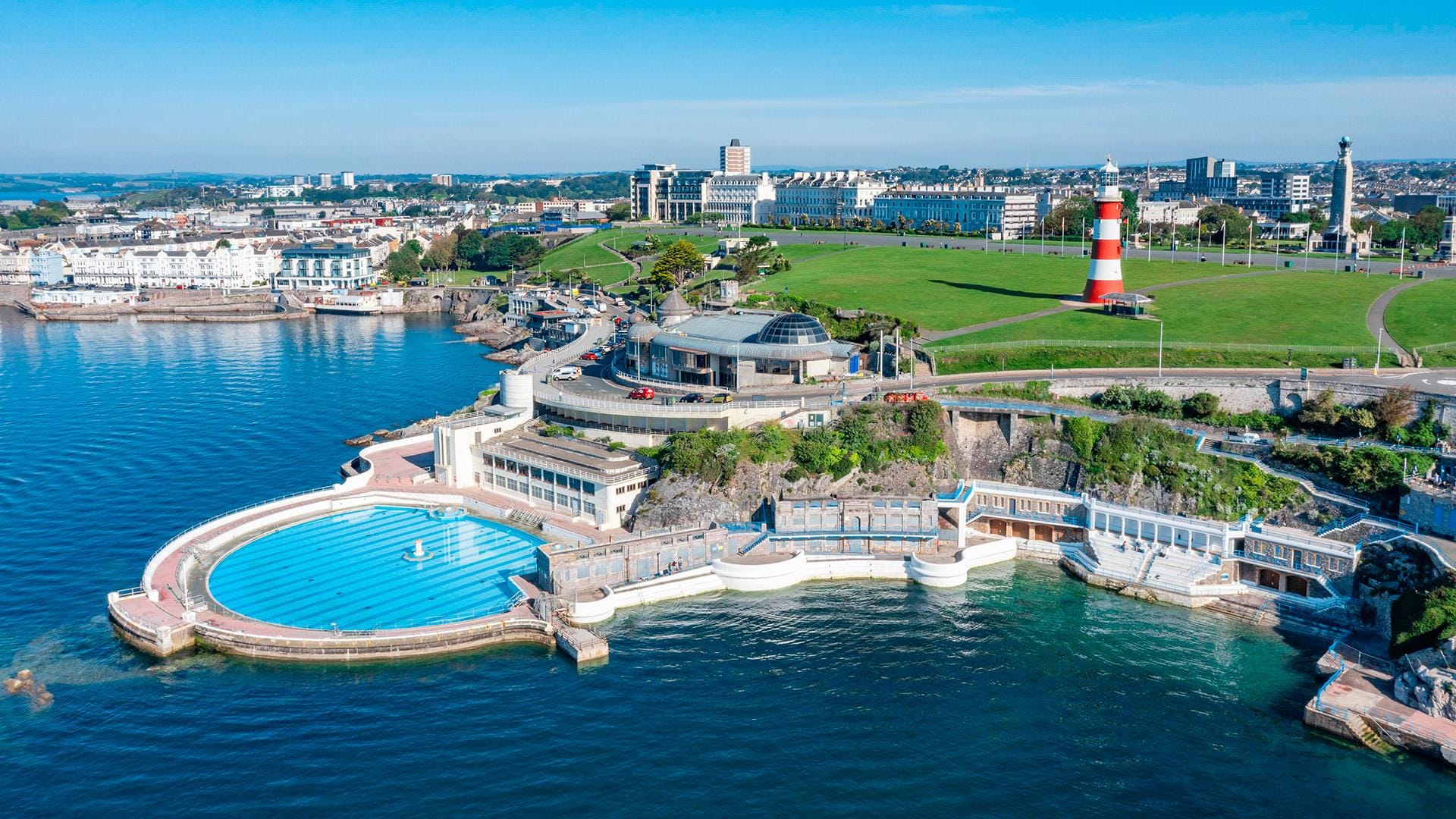
Devon has a good view lined up for Wednesday 12 August 2026, when a partial solar eclipse crosses the UK. In Plymouth, about 94.66% of the Sun is expected to be covered at around 7:16pm. Across Devon, the eclipse starts at 6:18pm and finishes at 8:10pm, with the Sun above the western horizon throughout. The South West will see some of the highest coverage in the country, making the county a practical place to plan an evening outdoors.
Every week we pick 🏆 the 5 best 🏆 things to do in Plymouth and send them to your inbox. Just one weekly email, no spam.
By submitting your email, you accept our Privacy Policy
For readers around Plymouth, the most organised option is Lowry Cross near Yelverton, where Plymouth Astronomical Society is holding a public viewing from 5pm onwards. The society has moved the event from Jennycliff because of the National Fireworks Competition that night. Free ISO-certified solar glasses will be handed out, and members will have telescopes fitted for safe close-up views of the Sun. First Light Optics and stargazing activities are also planned. The organisers say roads will be closed, so check the approach before setting off. The evening also coincides with the maximum of the Perseid meteor shower, although the eclipse is the main reason to arrive early.
Further east, the Norman Lockyer Observatory in Sidmouth is hosting eclipse and Perseid activities. Paying attendees will receive eclipse glasses after the safety briefing, while supplies last; the observatory says around 500 pairs are being kept for the event and that they will not be sold. The site is on Salcombe Hill Road, about a mile east of Sidmouth. It is a useful choice if you would rather watch with astronomers and proper equipment than set up alone. In the west and centre of the county, Dartmoor’s open tors offer broad horizons, with Haytor, Hound Tor and Saddle Tor among the better-known viewpoints. Hound Tor has a large car park and a short walk to the rocks, but there are no toilets or café facilities there. Haytor has visitor facilities, including toilets, at the National Park visitor centre. South Devon’s coast, including Slapton Sands, Bantham, Bigbury and Thurlestone, is also within the area of deepest coverage. For a beach setting, North Devon’s long shorelines at Saunton Sands, Woolacombe and Westward Ho! provide wide views towards the horizon. Exmoor’s higher ground, including Dunkery Beacon, Holdstone Down and Brendon Common, offers darker skies, though Dunkery Beacon is in Somerset rather than Devon and should not be confused with a Devon location.
The important bit is eye safety. Ordinary sunglasses are not suitable, even if they look very dark. Use undamaged eclipse glasses marked as meeting ISO 12312-2:2015(E), bought from a reputable supplier, and follow the instructions. Never look through binoculars, a telescope or a camera unless it has a certified solar filter fitted correctly; eclipse glasses worn over the eyepiece are not enough. If you cannot get proper glasses, use an indirect method such as a pinhole viewer, or project the Sun’s image through a colander or gaps between leaves onto the ground or paper. Cloud does not make direct viewing safe. Pack water, warm layers, a torch, a phone or downloaded map, and something comfortable to sit on, then check the forecast and local access arrangements before leaving. The next similar UK eclipse is not expected until 2081, so it is worth planning the viewing method as carefully as the viewpoint.
Published Date
10 August 2026