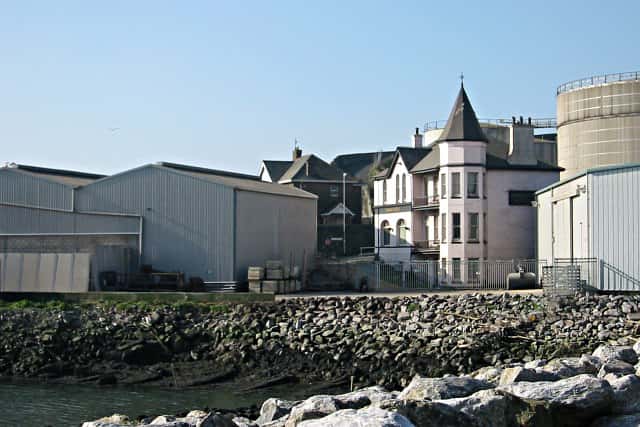
Cattedown is one of Plymouth's most overlooked corners, yet it sits on the water that effectively built the city. It forms part of Sutton Harbour, which is the birthplace of modern Plymouth: the Domesday Book of 1086 recorded it as Sudtone, meaning South Farm, and by the 13th century documents spoke of the port of Plimmue, with the name 'Plymouth' only appearing officially in King Henry VI's Charter of 1440. In the 16th century, this harbour based the fleet that faced the Spanish Armada, and in 1620 the Pilgrim Fathers set sail for America from the Mayflower Steps at its west end. Since 1989, Sutton Pool has been owned by Sutton Harbour Holdings PLC.
Every week we pick 🏆 the 5 best 🏆 things to do in Plymouth and send them to your inbox. Just one weekly email, no spam.
By submitting your email, you accept our Privacy Policy
The quays around Cattedown carry the names of the families and trades that shaped it. Lockyer's Quay was built in 1833 by Edmund Lockyer, director of the Plymouth & Dartmoor Railway, from a family that held the mayoralty between 1803 and 1844; copper fever, which drove much of the area's early trade, finally ran out in 1879. Johnson's Quay takes its name from brothers John and William Johnson, who owned the King's Tor granite quarries on Dartmoor and ran the Plymouth & Dartmoor Railway from 1848. North Quay, built in 1849-50 by the engineer Joseph Locke, once bustled with coal warehouses, transit sheds and goods yards moving wine, spices, potatoes and tobacco, while Hawkers Avenue is named after the Hawker family, who imported wine here for more than 300 years.
A lot of the area's history is tied to shipbuilding and repair. China House, now a pub and restaurant, appeared in a 1666 watercolour by Sir Bernard Gromme, and the site once held a Victorian shipyard founded in 1823 by William Shilston, who launched the West of England's first floating dry dock in August 1858. Marrowbone Slip later hosted the Demellweek and Redding scrapyard, which in 1957 broke up the HMS Amethyst, the frigate trapped in China from 1949 and the subject of the film 'Yangtse Incident'. Nearby, the Horsewash arch gave carriers a place to wash their horses in the sea, and Dung Quay was created in 1639 specifically for the town's refuse.
Walking east, the harbour's scale becomes clearer. The Custom House of granite went up in 1819-20 at a cost of £8,000, with William Lockyer serving as Comptroller of Customs. The Barbican, the fortified entrance to the medieval castle on Lambhay Hill, holds the highest concentration of cobbled streets in England, with more than 100 listed buildings, many Tudor and Jacobean. The old fish market stood there from 1892 to 1995 before the new one opened further east in 1995 at a cost of £3 million, which re-established Plymouth as a fish auction centre. Along the way, you'll spot the Leviathan, a 33-foot sculpture by Brian Fell that blends a cormorant, plesiosaur, John Dory, lobster and angler fish, affectionately known as the Barbican Prawn. The National Marine Aquarium, which opened in 1998, is the UK's largest, run as a charity with no income support and housing over 4,000 marine fish. If you want to take it all in, the Sutton Harbour Heritage Trail is an easy, flat asphalt walk of 1.1 miles from Lockyer's Quay round to Sutton Harbour, and it's part of the South West Coast Path.
Published Date
2 October 2026