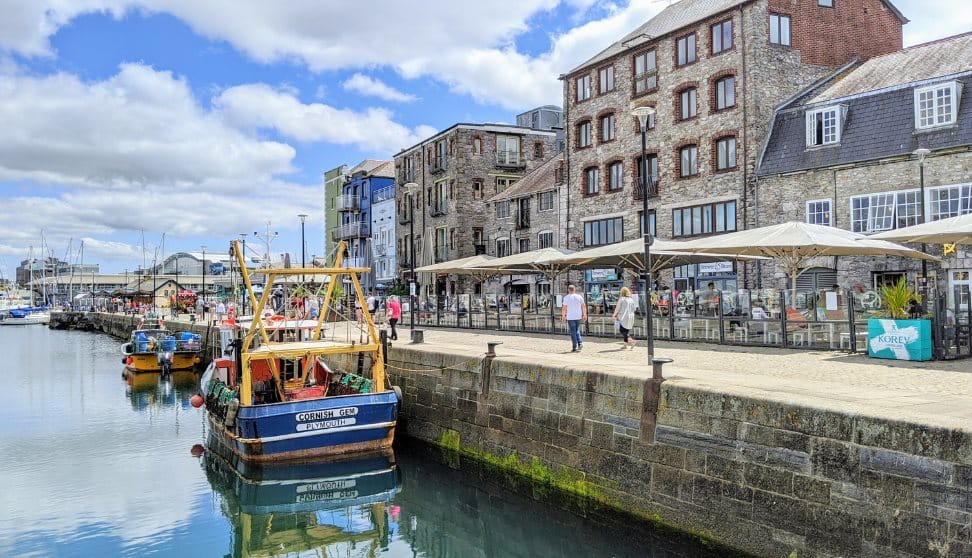
There is a particular kind of memory that comes with the Barbican, and for anyone who spent time down here in the 1980s, it is as much about the smell as the view. Back then, the working life of the harbour sat right alongside the leisure that was starting to take over, and a recent Plymouth Herald gallery, Smells and Sails, captures that old Barbican in a way that is hard to find anywhere else. It is worth a look if you want to see the waterfront as it was before the harbour was closed with a sluice in 1993 to keep the water depth steady for fishing and leisure boats and cut flood risk.
Every week we pick 🏆 the 5 best 🏆 things to do in Plymouth and send them to your inbox. Just one weekly email, no spam.
By submitting your email, you accept our Privacy Policy
That sluice changed the character of the place. In the same year, the old Victorian fish market at the eastern end of Southside Street closed, and the modern one opened over in Coxside, in Sutton Harbour. For centuries, the Barbican had been home to Plymouth's fish market, and it remains home to many fishermen still, though the trade has moved. The name itself comes from a fortified gate, the Castle Barbican, which guarded access to the Cattewater before the Royal Citadel was built, and the district is roughly the size and shape of the medieval walled city of Sutton.
What has survived is the real draw. The Barbican holds the highest concentration of cobbled streets in Britain and more than a hundred listed buildings, and it is one of the few parts of the city that escaped most of the Blitz and the slum clearances that followed. New Street, running north from The Barbican, was once called Rag Street, and the area is still centred on Southside Street and The Barbican, where most of the pubs and restaurants sit. The Elizabethan House, a rare late-16th-century home from when Plymouth was a thriving port, was restored in 2020 and 2021 as part of the Mayflower 400 commemorations; you can take a self-guided tour of the rooms and meet historical figures like a washerwoman and a wig maker. The Mayflower Steps are just a few doors down, near where the Pilgrim Fathers set off in 1620.
For a quieter moment, the Barbican Gardens, also known as the Elizabethan Gardens, are a small, tranquil spot in the old Elizabethan style, with low box hedges, colourful flower beds and aromatic herbs. If you would rather be on the water, the Royal Plymouth Corinthian Yacht Club sits in the heart of the Barbican, with membership at £12.50 a month and the clubhouse open Friday and Saturday evenings and Sunday afternoons. The Barbican Theatre on Castle Street keeps the arts going year-round, with a programme of theatre, dance, comedy and live music, and it has been working with local schools and communities for 39 years.
It is a strange, layered place to walk. The 1980s version of the Barbican, with its working harbour and old fish market, is gone, but the cobbled streets, the Elizabethan stone and the working boats that still tie up here mean the bones of it have not changed much at all. Whether you are coming for the history, the gardens or a pint on Southside Street, it is the one part of Plymouth that still feels like the old port.
Published Date
13 August 2026
More information