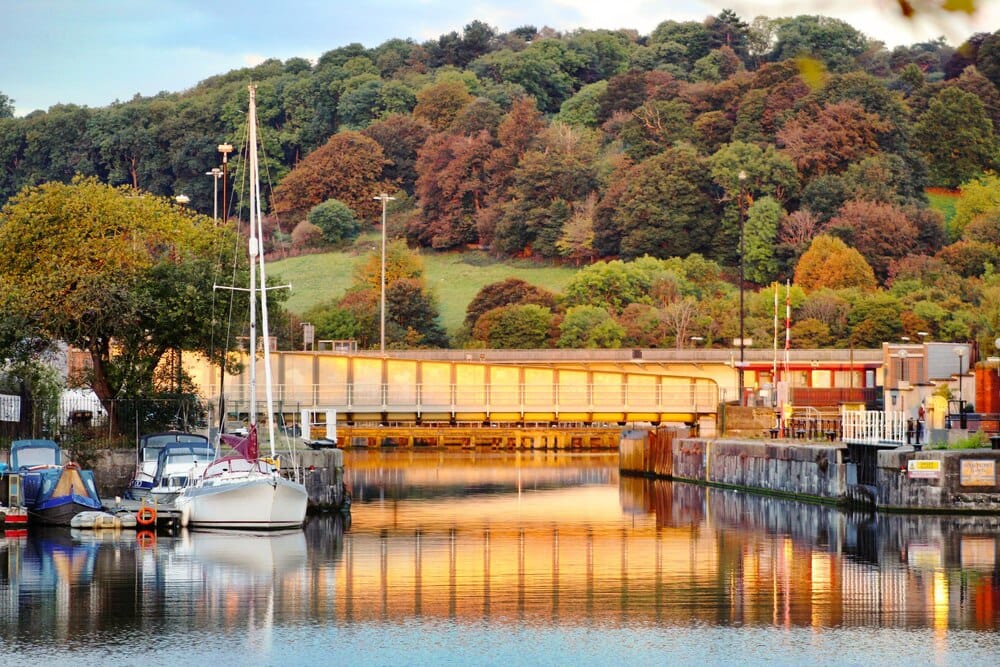
Autumn gives Plymouth an easy excuse to head beyond the city for a day. Dartmoor is around 25 minutes away, while the South Devon coast, historic estates and Cornwall’s gardens offer very different ways to spend a few hours outdoors. The season brings changing colours, cooler walking weather and quieter-looking villages, although opening times and access can vary, so it is worth checking each attraction before setting off.
Every week we pick 🏆 the 5 best 🏆 things to do in Plymouth and send them to your inbox. Just one weekly email, no spam.
By submitting your email, you accept our Privacy Policy
Dartmoor is the most straightforward choice for a day among autumn landscapes. The national park covers 954 square kilometres, with routes and viewpoints ranging from the open tors to wooded valleys. Haytor provides wide views across the moor, while nearby Hound Tor is linked with the setting of The Hound of the Baskervilles. For a shorter woodland walk, Becky Falls combines forest paths with a waterfall. Further north, Postbridge has its well-known 12th-century Clapper Bridge, and Princetown is home to the Dartmoor Prison Museum. Villages add a slower pace to the trip: Widecombe-in-the-Moor is known for its church tower, Chagford for its historic Market House and Lustleigh for its thatched cottages. Keep an eye out for Dartmoor ponies, which have lived freely on the moor for centuries. Buckland Abbey, the former home of Sir Francis Drake, and Buckfast Abbey, founded in 1018, offer two different historic stops on the edge of the area.
For a mix of water, history and small-town streets, head towards Dartmouth and the River Dart. Dartmouth’s harbour is overlooked by the Royal Naval College, with Dartmouth Castle on one side of the river and Kingswear Castle on the other. The Dartmouth Steam Railway runs between Paignton and Kingswear until late October, making it a seasonal option for seeing the coast and river without driving the whole route. From Dartmouth, the ferry to Kingswear also forms part of the journey to Greenway, Agatha Christie’s former holiday home near Brixham. The National Trust property contains personal belongings and rooms connected with the author’s life, and can also be reached on foot from Broadsands or Kingswear. Totnes makes a good alternative stop on the way back to Plymouth, with its Norman castle, markets and independent shops. Dartington Hall, near the town, adds a historic estate and medieval courtyard to the route.
The coast south of Plymouth has its own autumn appeal. Salcombe sits around a tidal estuary and combines coastal walks with galleries and views towards Start Point Lighthouse. Kingsbridge, about 35 minutes from Plymouth, is another useful base for exploring the estuary and reaching Slapton Sands. In the Dartmouth area, Blackpool Sands is surrounded by wooded hills, while Brixham offers the headland and nature reserve at Berry Head. If you are interested in Agatha Christie’s Devon, Burgh Island near Bigbury-on-Sea is reached across the sand at low tide or by sea tractor at high tide; the island is cut off twice daily, so the crossing needs planning. Greenway and Burgh Island are separate trips, but both show how closely the author’s work is tied to the South Devon landscape.
For a garden-focused autumn outing, The Lost Gardens of Heligan near St Austell are about 1 hour 15 minutes from Plymouth. The restored gardens include woodland paths, a jungle walk, an Italian Garden and a Walled Garden, with seasonal produce and changing foliage through the year. Its autumn programme includes harvest displays, apple pressing, cyder tasting and more than 200 varieties of pumpkins and other cucurbits. The Eden Project is closer to St Austell, around 45–50 minutes from Plymouth, and offers a very different experience inside its two biomes. These Cornwall trips work well when the weather is mixed, as much of the visit can be spent exploring sheltered indoor spaces as well as the surrounding gardens.
Closer to the city, Exeter provides a change from countryside and coast. It is roughly an hour from Plymouth and brings together Roman, medieval and Georgian history, with Exeter Cathedral, the quayside, underground tunnels and the Royal Albert Memorial Museum. For a day that stays outdoors, the River Exe and nearby Dawlish or Budleigh Salterton offer seaside walks and open views. Taken together, these trips cover several versions of autumn in the South West: moorland colour, estuary towns, historic houses, gardens and coastal paths, all within reach of Plymouth.
Published Date
14 September 2026