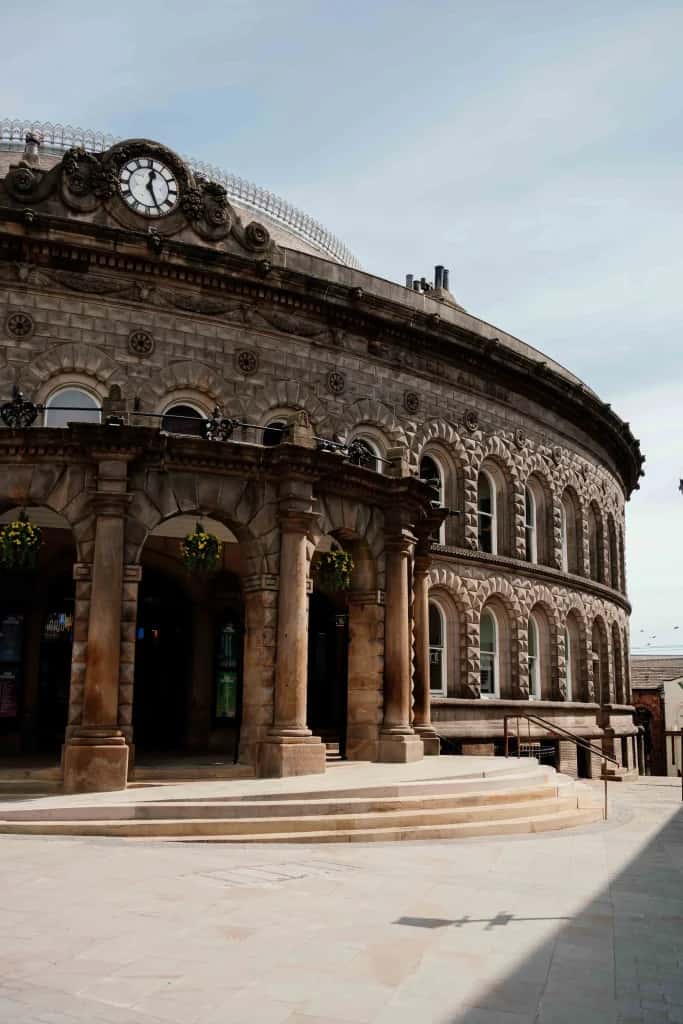
If you want to trace how Leeds grew from a small market town into a northern powerhouse, this is a good year to do it. The city is marking 400 years since King Charles I granted its first Royal Charter on 13 July 1626, and the Leeds400 programme runs through 2026 across Leeds Museums and Galleries and Leeds Libraries.
Every week we pick 🏆 the 5 best 🏆 things to do in Leeds and send them to your inbox. Just one weekly email, no spam.
By submitting your email, you accept our Privacy Policy
A sensible place to start is the Central Library on Calverley Street. The exhibition 'Leods: 400 Years of Leeds in the Leeds Libraries Collections' runs until 11 November 2026 and pulls together 17th-century manuscripts, rare maps, photographs, newspapers, pamphlets and, somewhat unexpectedly, football fanzines. If you prefer to see a more personal take, Assistant Community Curator Pat Bourne gives a talk on 5 November, presenting a selection of museum objects that reflect the 400 years since the charter. From there it is a short trip to Leeds Art Gallery on The Headrow, which is free to enter. It is open Tuesday to Saturday from 10am to 5pm and on Sunday from 11am to 3pm, and it is closed on Mondays. Its current shows include 'Some Steel', which looks at sculpture and steel in Britain between 1960 and 1990 until 10 January 2027, and 'Steve McQueen: Resistance', which opens on 6 November and runs until 25 April 2027.
Further out, Abbey House Museum sits in the gatehouse of the ruined 12th-century Kirkstall Abbey, a Grade II listed building. Its 'In the Picture' display combines iconic objects from the collection with paintings and photographs of the building's history, and it runs until 31 December 2026. Half-term fans will be interested to hear that the Spooky Streets* activities run from Saturday 24 October until Sunday 1 November, included in entry. Entry is free with a National Art Pass. The museum is closed on Mondays, open Tuesday to Friday and on Sunday from 10am to 5pm, and on Saturdays from 12pm to 5pm, with last admission at 4.30pm.
The industrial story is told at Leeds Industrial Museum at Armley Mills, which is about two miles from the centre. The 'Engineery' exhibition, marking the 300th anniversary of John Smeaton, the so-called father of civil engineering, closes on 1 November. The museum's collection includes a cast iron rack rail made by Gothard & Salt in Leeds around 1812, used on the Middleton Railway, which is widely regarded as having run the world's first commercially successful steam locomotives. Adult admission is £6.40, children aged 3 to 18 pay £3.50 and a family ticket for up to two adults and three children costs £14.50. Households in the LS3, LS4, LS5 and LS12 postcodes can get in for £1 with proof of address. It is open Tuesday to Friday from 10am to 4pm and at weekends from 12pm to 4pm. The 'Ludd in the Machine' exhibition, which looks at trade unions and workers' rights from 1812 onwards, runs until 13 August 2027.
If you prefer something smaller, the Stanley & Audrey Burton Gallery at the Parkinson Building on Woodhouse Lane has its Leeds 400 display, which looks at the places that have shaped the city and the role of the University of Leeds in it. It finishes on 31 October. Later in the season, the Leeds Museums and Galleries talks are a relaxed option: the 1152 Club meets at Kirkstall Abbey on Tuesday 3 November from 10.15am to 11.15am, aimed at people aged 55 and over, and free to attend. The Sociable History Club at Leeds City Museum has its next session on Friday 4 December.
Published Date
29 October 2026