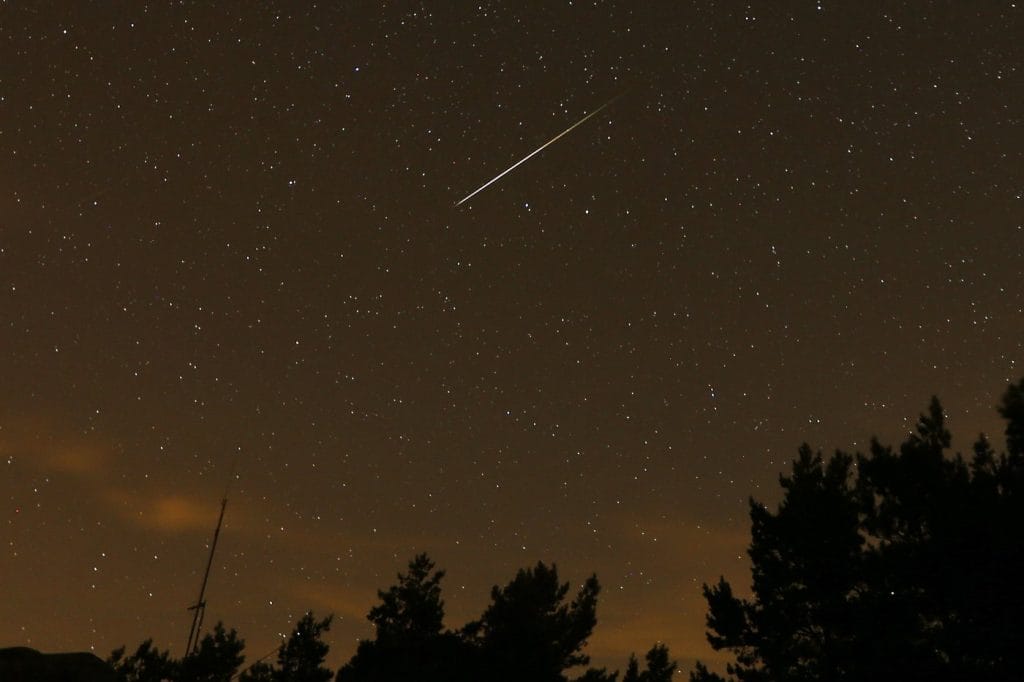
Halifax is in for a busy week under the stars. A partial solar eclipse and the peak of the Perseid meteor shower both land in the same stretch, so it is worth planning ahead if you want to catch both.
Every week we pick 🏆 the 5 best 🏆 things to do in Halifax and send them to your inbox. Just one weekly email, no spam.
By submitting your email, you accept our Privacy Policy
The eclipse comes first, on Wednesday, August 12. It will be visible across all of Nova Scotia in the afternoon, and in Halifax it runs from 1:58 pm to 3:58 pm, with maximum coverage at 3:00 pm when about 42.2% of the sun's diameter is covered. You cannot look at the sun without certified ISO 12312-2 eclipse glasses, so that is the first thing to sort out; if you kept your glasses from the 2024 eclipse and they are not damaged, those will work. For a free way to see it, Saint Mary's University is hosting a public viewing on the lawn along Inglis Street outside the Burke building from 2:00 pm to 4:00 pm, where experts will hand out free eclipse glasses and set up telescopes with solar filters.
The Perseids take over that night and into the next. The shower peaks on the night of August 12 to 13, with the highest rate expected around 14:53 UTC on August 13. Under dark skies, that can mean 50 to 100 meteors an hour, and some reports push it to 90 or more in ideal conditions. The radiant sits in the constellation Perseus, and the shower is fed by debris from comet 109P/Swift-Tuttle, which orbits the sun every 133 years. A new moon on August 12 keeps the sky dark, which is exactly what you want for a shower like this.
For the best view, the window is between midnight and dawn on August 13, specifically after 10:00 pm to 2:00 am. The trick is to find a dark, open spot well away from streetlights, give your eyes 15 to 30 minutes to adjust without glancing at your phone, and look across the whole sky rather than staring at one point. You do not need binoculars or a telescope; the best way to see them is with the naked eye.
If you are willing to drive, Nova Scotia's only Dark-Sky Preserve is Kejimkujik National Park, which has been designated since 2010. The main viewing area is the Sky Circle near Parking Lot 1 in Jeremy's Bay Campground, a short 100-metre path from the lot. The park takes camping from mid-May through October, and the Canada Strong Pass covers free admission and 25% off camping from June 19 to September 7. A bit further afield, Mount Carleton Provincial Park in New Brunswick is another preserve, the largest in its province, and it holds a Star Party on August 14 to 15 with information sessions on the Friday afternoon.
If you end up staying in the city, the Burke-Gaffney Observatory at Saint Mary's is worth knowing about for later in the year. Perched on the roof of the 22-storey Loyola Residence tower, it is one of only a few fully automatic robotic observatories in the world that you can control via social media, and it runs public tours roughly every other weekend along with free open houses.
Published Date
9 August 2026
More information