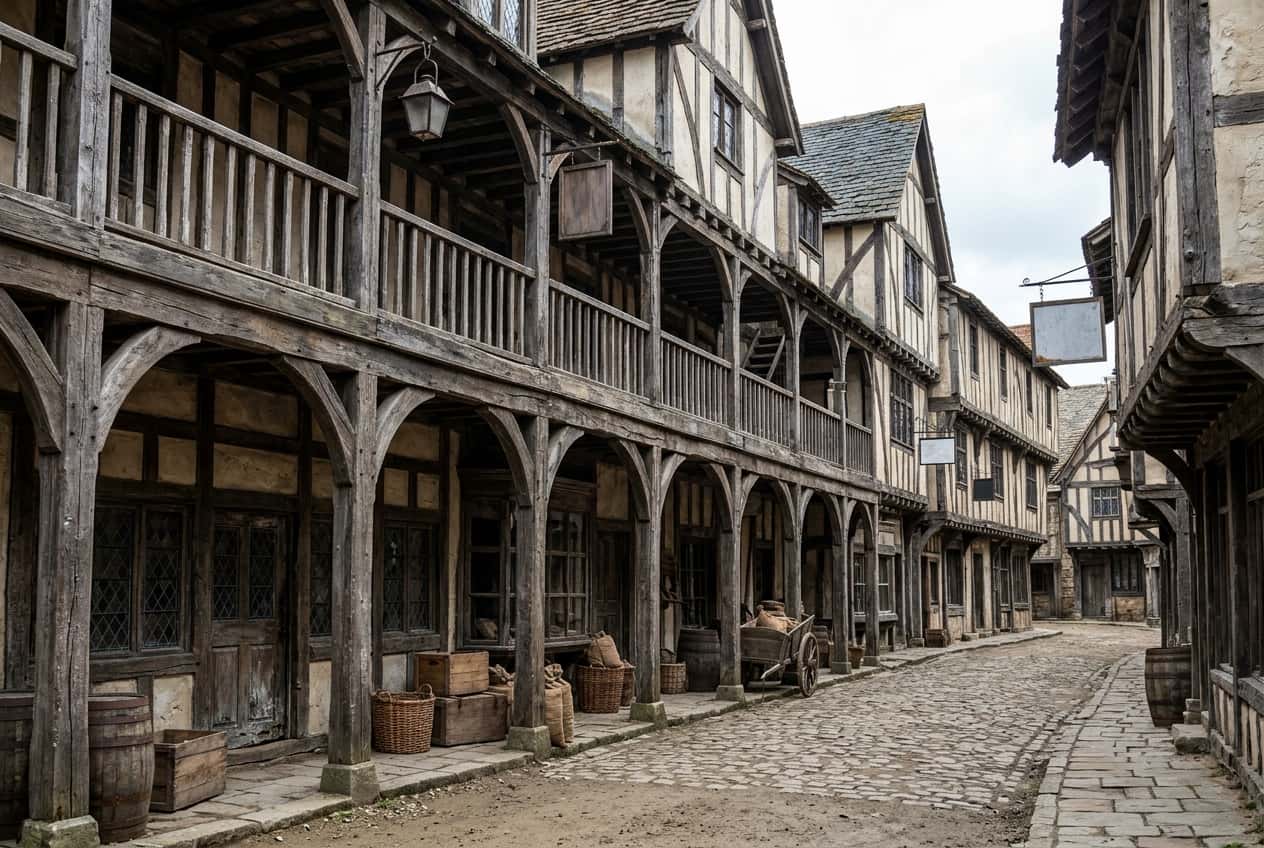
If you have never spent an afternoon wandering the Rows, Rowvember is the month to do it. Throughout November, Chester's medieval shopping galleries open up for a month-long celebration, with rare-access tours and expert-led talks that give you a look at the city's heritage you simply cannot get at any other time of year. It is a proper cultural event, spread across multiple dates and activities, and it is built around one of the most unusual features of the city: the only surviving continuous first-floor medieval galleries in Britain.
Every week we pick 🏆 the 5 best 🏆 things to do in Chester and send them to your inbox. Just one weekly email, no spam.
By submitting your email, you accept our Privacy Policy
For the uninitiated, the Rows are a series of covered walkways that run along the first floor of Chester's four main streets — Eastgate Street, Watergate Street, Bridge Street and part of Northgate Street, with fragments continuing onto Lower Bridge Street. They radiate from the Cross in the heart of the walled city and are one of Chester's main attractions, often described as double-tiered streets. The urban landscape they create is unique in the world, traceable back more than 800 years and built on the foundations of the two-thousand-year-old Roman fortress, Deva, on which modern Chester stands. Today they are home to more than 200 shops, alongside pubs, restaurants, cafes, quirky independent stores, hotels, offices and community spaces. A pedestrianisation scheme brought in around 1995 keeps most vehicles out during the busiest parts of the day, which makes them easy to wander at your own pace.
Nobody is entirely sure how they began. The theories range from the galleries being built on Roman rubble to medieval townsfolk building storefronts upwards to save space and profit within the restrictions of the Roman walls, or even a security measure against Welsh raiders. The research leans towards the late 13th century, possibly spurred by the devastating fire of 1278 when Chester was a major medieval port. Back then, the Rows carried the names of the trades that clustered there: Bridge Street held Shoemakers Row and Mercers Row, Watergate Street was Butchers Row, Eastgate Street hosted Cornmarket Row and Ironmongers Row ran up Northgate Street. Over the centuries, some notable visitors have left their mark: Daniel Defoe complained in the first half of the 18th century that they made the city look both old and ugly, John Wesley reckoned they kept him clean and dry in any weather, and the Victorian novelist George Borrow thought they held all the best shops in Chester.
Architecturally, the system is a first-floor gallery with public walkways running parallel to the street below, giving access to interior shops and an open stall area, the stallboards, for displaying goods. The undercrofts below varied from 3.7 to 9 metres wide and 10 to 41 metres long, with the Row shops above them no more than two metres wide and three metres deep. A 2020 heritage programme, backed by a £1.08m Historic England grant and supported by Cheshire West and Chester Council, Chester BID, Marketing Cheshire, the University of Chester, Chester Civic Society and Grosvenor, spent four years restoring the fabric of the Rows, with more than 100 property improvements and heritage refurbishments, five commissioned films, exhibitions, visitor trails and more than 450 Medieval Meet and Greet experiences. For now, the Rows are best enjoyed as they are: a working part of the city, with restaurants like Shrub and the Olive Tree Brasserie, Turkish kitchens such as Pars Kahve and wine bars like Paysan all tucked into the galleries. Rowvember is simply the excuse to see them from the inside.
Published Date
27 October 2026
More information