Brighton and Hove has been named the UK’s pub capital in Capital on Tap’s 2026 study, which compared 33 cities. Brighton scored 7.36 out of 10, with 7.74 pubs per 10,000 residents, an average Google rating of 4.42 out of 5 and almost 80% independent ownership. The average pint was recorded at £6.65, so the city’s pub reputation comes with a higher-than-average price tag. The figures give some context to a drinking culture that has been part of Brighton’s story for centuries: the town had 41 inns and pubs in 1800, and the Beerhouse Act led to 100 new beerhouses opening during its first week in 1830.
Every week we pick 🏆 the 5 best 🏆 things to do in Brighton and send them to your inbox. Just one weekly email, no spam.
By submitting your email, you accept our Privacy Policy
For the clearest sense of that history, start in The Lanes. The Cricketers Inn on Black Lion Street is generally recognised as Brighton’s oldest pub, with origins dated to 1545 or 1547. Although the present building is Victorian, its interior includes dark wood panelling, red seating and fittings dating from an early-20th-century refurbishment. Graham Greene was a regular and the pub’s Greene Room contains letters connected with the author. A short walk away, The Bath Arms occupies an early-19th-century house and became a pub in 1864. It is described as the oldest licensed premises in The Lanes, with more than 160 years of history. The Druid’s Head, converted from an 18th-century house into a pub in 1825, is another historic stop, while The Pump House retains its original mathematical tiles and has traded as a pub since 1776.
North Laine offers a different kind of pub crawl, with several independent venues in a compact area. The Basketmakers Arms on Gloucester Road is known for its tobacco-tin décor and draught beers, including Dark Star and Gale’s. The Great Eastern on Trafalgar Street has low ceilings, wooden floors and a Western-saloon feel, with beers, whiskies and bourbons but no food. Nearby, The Prince Albert combines a protected building dating from around 1840 with live music and a mural of musicians including Jimi Hendrix and Amy Winehouse. It does not serve food, although customers can order from nearby takeaways. For a quieter music-led option, The Foundry on Foundry Street has records on the walls, leather sofas and a regular local crowd.
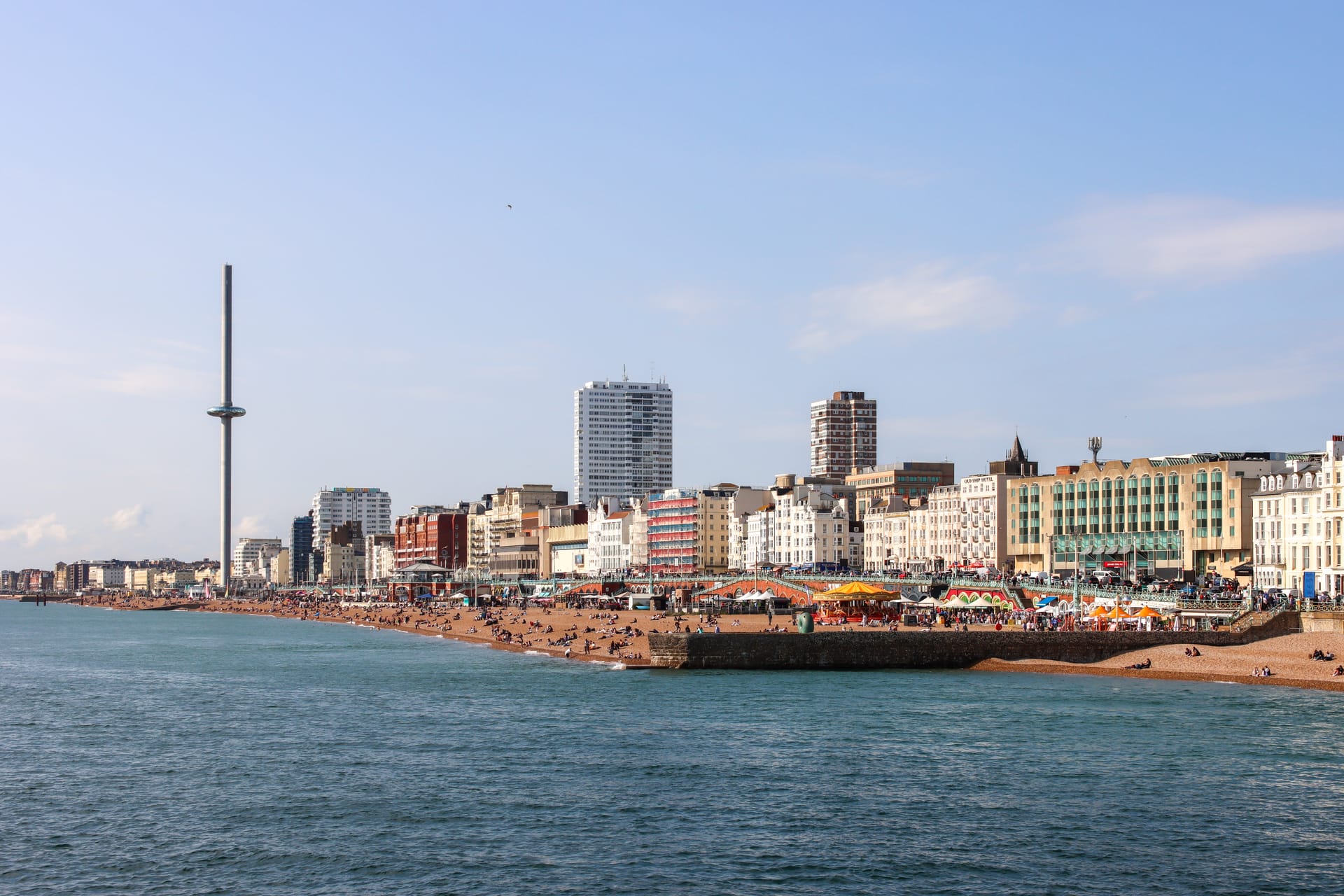
The city’s pub history also reaches the seafront. The Fortune of War, in the Kings Road Arches, has served drinks since 1882 and looks across Brighton Beach towards the pier and West Pier. Its boat-shaped interior, maritime details and outdoor drinking area suit its position beside the beach; local craft beers, ales and ciders are among the drinks available. Further along, The Hop Poles on Middle Street has an old-fashioned interior with hops hanging from the ceiling. In Kemptown, the tiny Hand in Hand on Upper St James’s Street has its own microbrewery, Hand Brew Co, while The Black Dove on St James’s Street is centred on cocktails, a subterranean bar and weekend rock ’n’ roll DJs.
For beer-focused visits beyond the traditional pub interiors, Holler Brewery’s taproom on Elder Place serves vegan beers in a converted shed, with cask and keg options and pizza available from Fatto a Mano. Brighton Bier’s brewery and taproom on Roedean Road adds a beer garden, tasting sessions and brewery tours, with Japanese street food served on Friday evenings. Together with the older inns, music pubs and neighbourhood bars, these venues show why Brighton’s pub scene can be read as both local history and a living part of the city’s leisure culture.
Published Date
13 September 2026
More information