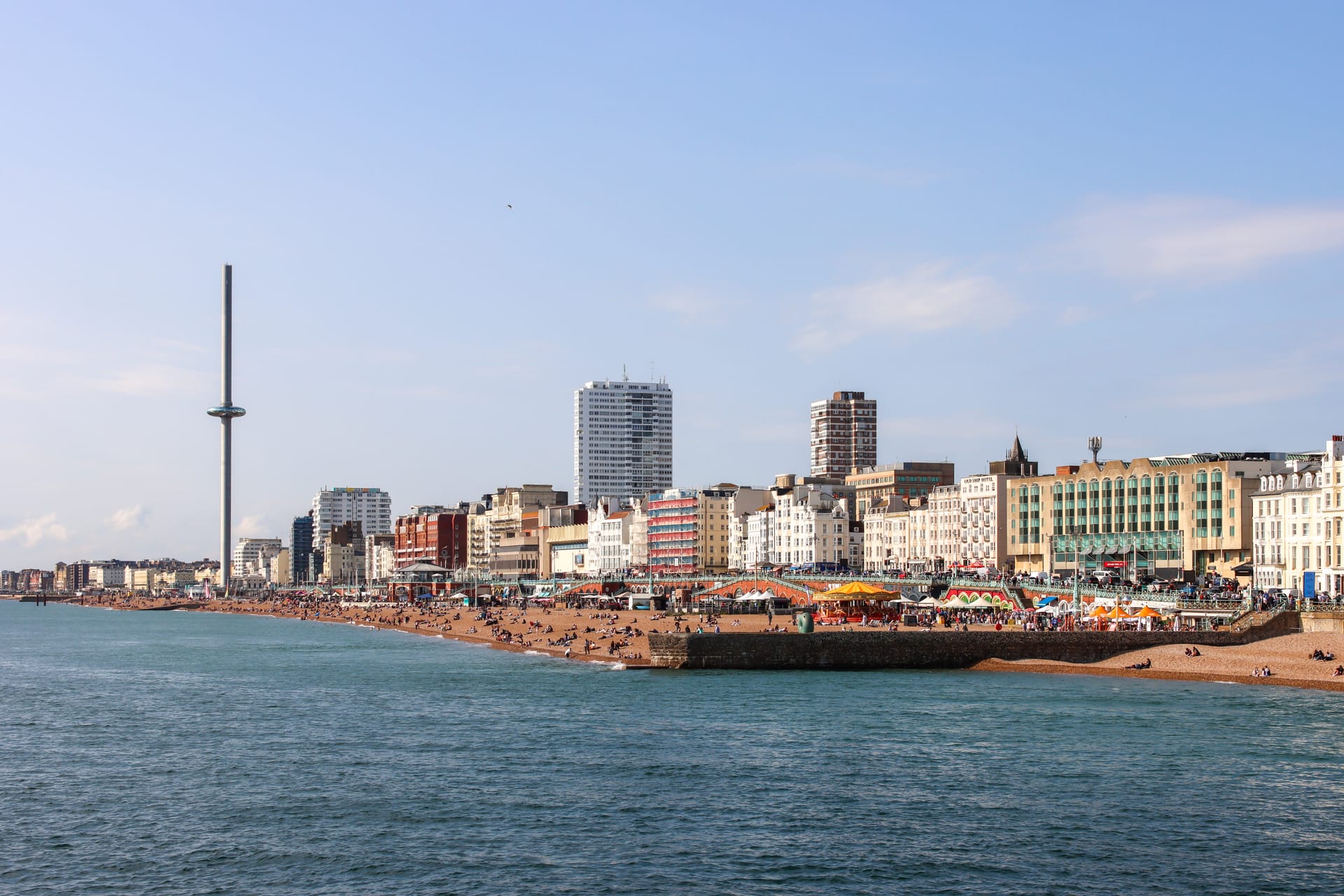
Brighton’s coastal charm hides a clandestine history that remains visible today if you know where to look. Beneath the streets of Brighton and Hove, over 70 passageways are accessed via the river running below ground at Pool Valley. This network served as the backbone for an era of illicit trade, where wool, silk, and liquor were moved away from the prying eyes of customs officers. One of the most accessible ways to experience this history is at the Harbour Hotel Brighton on King's Road. Their subterranean 'HarSPA' is built directly into 18th-century smuggler's tunnels. For those not staying at the hotel, the spa is open to visitors for £40 from Monday to Thursday or £45 on weekends, provided you book a 60-minute treatment. It’s a strange sensation to swim in a 10-meter pool or sit in a Scandinavian hot tub while surrounded by the same brickwork that once hid contraband.
Every week we pick 🏆 the 5 best 🏆 things to do in Brighton and send them to your inbox. Just one weekly email, no spam.
By submitting your email, you accept our Privacy Policy
Further into town, the Marine Tavern on Broad Street offers a grittier look at this heritage. Established in the late 1800s, the pub contains a series of underground tunnels in its cellar. One specific tunnel was sealed after a body was reportedly found trapped behind the bricks. The tavern is a focal point for local ghost lore, with frequent reports of spirits like 'Percy' and the 'Lady in Green'. In fact, as recently as June 2024, CCTV footage captured a strange green mist in the cellar. The pub was also the starting point for the 'Kreepy Kemptown Ghost Walks' led by investigator Adrian J. Andrews until his passing in early 2026. Similarly, The Druids Head in Brighton Place is tied to 18th-century smuggling, with historical accounts suggesting tunnels once connected its cellars directly to the beach and the Royal Pavilion. The Old Ship Hotel, which dates back to 1559, maintains a similar network of passages in its cellars that linked the seafront to various parts of the city.
If you venture slightly outside the immediate city center, the smuggling trail continues along the coast and into the Downs. In Lancing, the New Sussex Hotel recently revealed a deep, well-like structure during renovations that historians believe served as a smuggler's tunnel or a salt cupboard. For a more traditional atmosphere, Ye Olde Smugglers Inne in Alfriston remains a preserved 14th-century site within the South Downs National Park. It features rooms named after local historical figures like the 'Stanton Collins Room' and allows dogs for a small fee. Back in Brighton, pubs like the Hand in Hand in Kemptown or the Prince Albert near the station don't necessarily have tunnels, but they maintain the historic Victorian aesthetic that defined the era. While local legends sometimes claim tunnels stretch 50 miles to places like Beddington Caves, the local geology of clay and chalk makes such long-distance passages impossible. Instead, the reality is a series of short, strategic hideaways that allowed the 'owlers' to move their goods from the shore to the safety of the city's cellars.
Published Date
19 May 2026